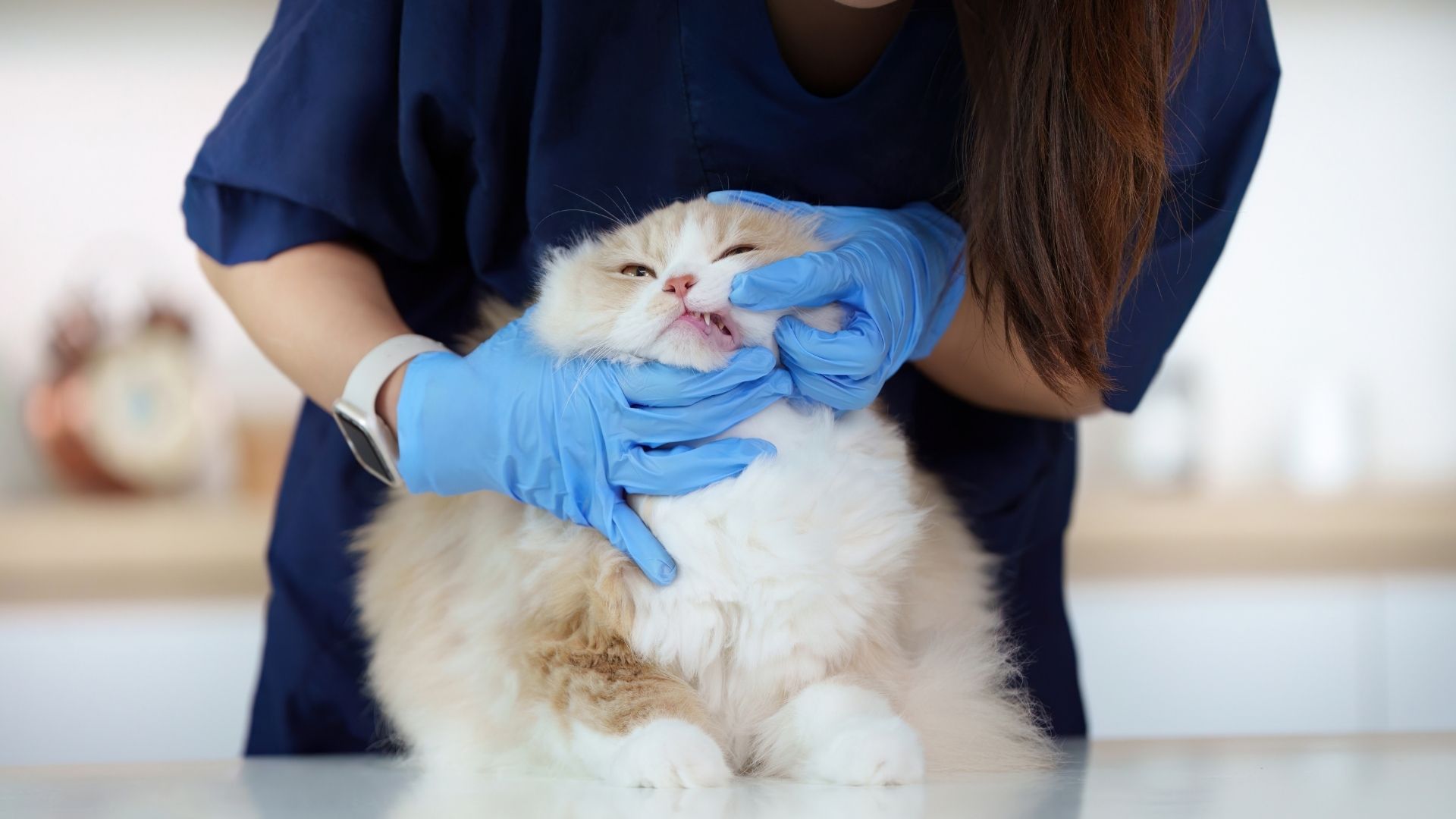
Cat Dentistry & Oral Surgery in Oxford, CT
Dental disease is one of the most common — and most overlooked — sources of pain in cats. At Cat’s Corner Veterinary Hospital in Oxford, CT, veterinary dentistry and oral surgery are a central focus of our care, from routine cleanings to advanced extractions, all performed with feline comfort and safety firmly in mind.
Why Dental Care Matters for Cats
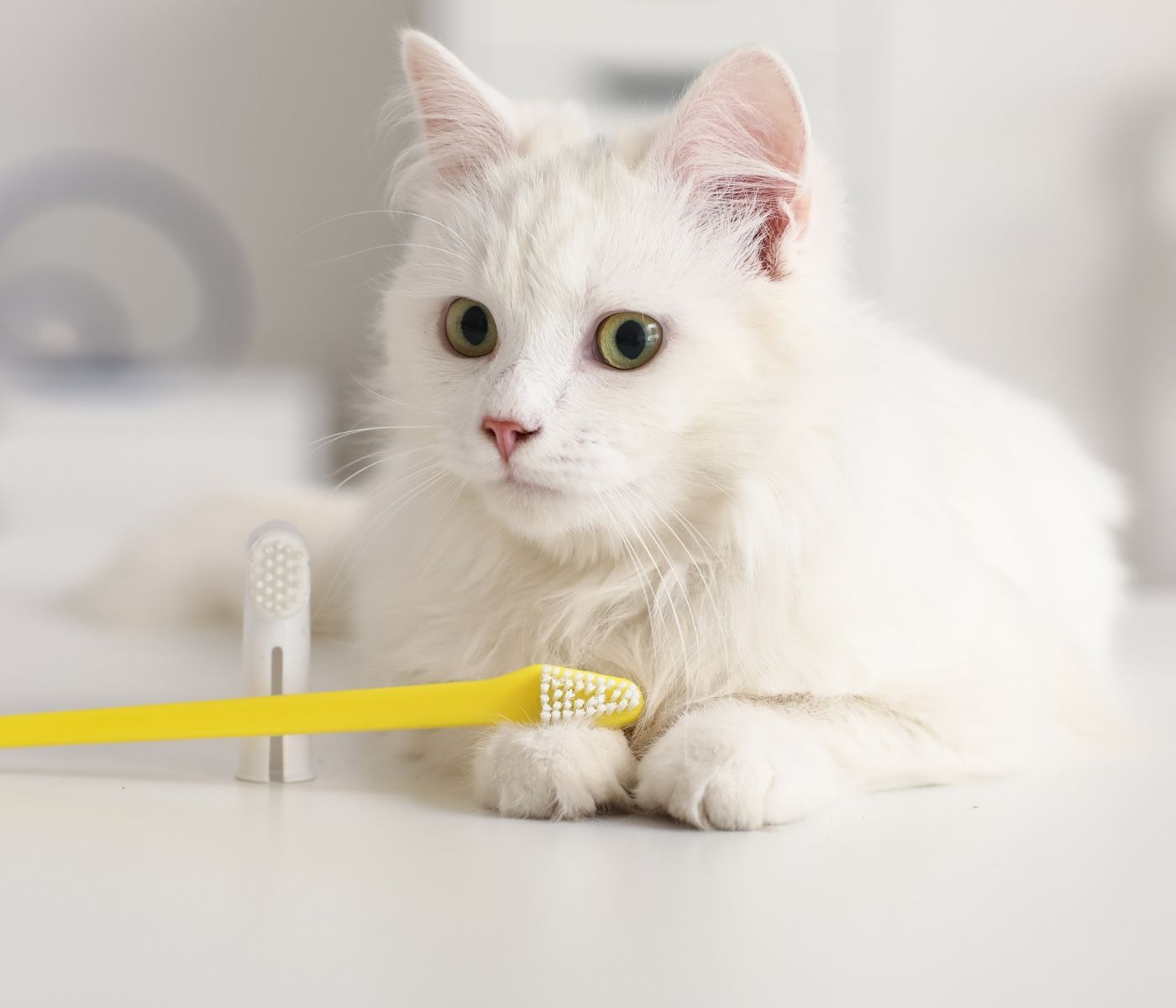
Just as people need regular dental visits, cats need routine dental care to stay healthy and pain-free. Plaque hardens into tartar and spreads below the gumline, leading to periodontal disease and tooth resorption — painful conditions that are easy to miss, because cats hide discomfort so well. Left untreated, dental disease can affect not just the mouth but a cat’s overall health and comfort. Caught early through preventive wellness care, it’s very manageable. Dental care is a particular focus here: Dr. Ball’s years of experience in feline dentistry draw referrals from other area veterinarians, and relieving a cat’s oral pain is some of the most rewarding, life-improving work we do.
Complete Feline Dental Care
We offer a full spectrum of dental care for cats, from preventive cleanings that head off disease to the surgical work that resolves it. Every procedure is tailored to your individual cat’s mouth and overall health, with nothing done in isolation from the rest of their care.
Cleanings & Exams
Thorough oral exams, professional ultrasonic cleanings, full-mouth dental X-rays, and protective sealants help prevent disease and catch problems below the gumline early.
Extractions & Oral Surgery
When teeth are damaged or painful, we perform extractions and oral surgery with nerve blocks and careful technique — part of our broader surgical care for cats.
What to Expect During Your Cat’s Dental Procedure
Your cat’s safety guides every step, from pre-anesthetic testing through recovery.

Before any dental procedure, we run a physical exam and bloodwork to confirm your cat can safely handle anesthesia, then place an IV catheter for fluids and medication access. A certified technician monitors your cat’s vital signs throughout, while another performs the cleaning. Dr. Ball then reviews full-mouth X-rays and a magnified oral exam to find hidden disease below the gumline and decide whether any extractions are needed.
Common Questions About Cat Dental Care
Dental procedures raise understandable questions, especially around anesthesia. Here are answers cat owners often ask about dental care at Cat’s Corner Veterinary Hospital. If you have concerns specific to your cat, our team is always glad to talk them through.
Why does my cat need anesthesia for a dental cleaning?
K
L
Anesthesia lets us clean below the gumline, take full-mouth X-rays, and examine every tooth thoroughly — none of which is possible, or comfortable, on an awake cat. At Cat's Corner, we take extensive precautions, including pre-anesthetic bloodwork and continuous monitoring, to keep the procedure as safe as possible for your cat.
How often should my cat have a dental cleaning?
K
L
It varies from cat to cat. Some need yearly cleanings, while others go longer between them. The best guide is a regular oral exam — during your cat's wellness visit at Cat's Corner, we'll assess their mouth and recommend a schedule based on what we find, since dental disease can progress quietly.
What are signs my cat might have a dental problem?
K
L
Cats are skilled at hiding oral pain, but possible signs include bad breath, drooling, or reluctance to eat or chew. Because these can be subtle, a professional oral exam is the most reliable way to catch dental disease early. If you've noticed any of these, it's worth scheduling a visit.
What is tooth resorption in cats?
K
L
Tooth resorption is a common, painful feline condition in which the structure of a tooth breaks down over time, often below the gumline where it's hard to see. Full-mouth dental X-rays at Cat's Corner help us detect it early so we can relieve your cat's discomfort, usually by removing the affected tooth.